English
 русский
 Español
 عربى
عربى
Industry News
Home / News / Industry News / Full Welded Valve: Exploring Material Options for High-Pressure and High-Temperature Use
2026-01-02
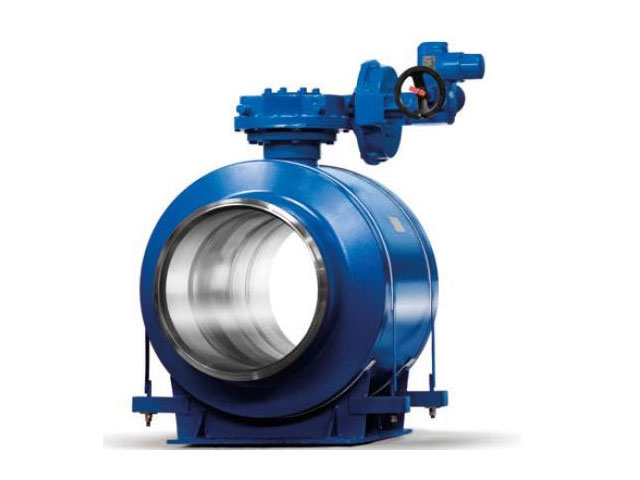
The use of Full Welded Valves in High-Pressure, High-Temperature (HPHT) applications represents a significant engineering consideration. These conditions push materials toward their functional limits, demanding careful selection to ensure valve integrity, operational control, and safety over the design life. The material science behind these valves is central to their performance in such services.
Service in HPHT environments introduces multiple, simultaneous stresses on materials. Elevated temperatures can reduce the yield strength of metals, while sustained high pressure imposes constant tensile stress. Over time, this combination can lead to creep, a gradual and permanent deformation. Thermal cycling between operating and ambient conditions generates fatigue stresses, which can initiate cracks. Furthermore, high temperatures often accelerate oxidation and chemical reactions between the material and the process fluid.
The valve body and bonnet, as primary pressure boundaries, require materials with long-term strength stability. While carbon steel is suitable for many applications, its use at elevated temperatures is limited. For hotter services, low-alloy steels containing chromium and molybdenum, such as grades 1.25Cr-0.5Mo or 2.25Cr-1Mo, are employed. These alloys retain a greater portion of their room-temperature strength at higher temperatures and offer improved resistance to hydrogen attack in hydrocarbon service.
For even more severe conditions, austenitic stainless steels like 316H or stabilized grades may be considered for their strength and oxidation resistance. In the most demanding applications, nickel-based superalloys are evaluated for their exceptional strength retention and corrosion resistance at very high temperatures.
The challenges extend to internal components. The ball and stem must resist mechanical wear, galling, and deformation under high seat loads. Materials such as precipitation-hardened stainless steels are common, often with surface hardening treatments or applied wear-resistant coatings to extend life.
Sealing presents a notable challenge. Soft polymers have temperature limitations. Therefore, HPHT valves often utilize metal-to-metal sealing. Achieving a bubble-tight seal with metal seats requires very precise machining, exceptional surface finishes, and often a lapping process. The design must also manage the differential thermal expansion between the ball, seats, and valve body to prevent binding or loss of seal during temperature transients.
Valve design for HPHT conditions frequently moves beyond standard pressure-based calculations to include strain-based analysis, ensuring integrity under installation and thermal loads. Manufacturing processes are controlled with attention to heat treatment, which is critical for developing the required material properties, and to welding procedures qualified for the specific materials and service conditions.
Validation is a key phase. Prototype valves are typically subjected to rigorous qualification testing cycles that simulate pressure and temperature extremes, as well as thermal and pressure cycling, to verify design adequacy and functional performance before being approved for project use.
Specifying a full-welded valve for HPHT service is a multidisciplinary effort that deeply integrates materials science with mechanical design. The goal is to create a component that not only contains pressure but also remains operable and leak-tight under thermal stress over time. A thorough evaluation of material properties, coupled with robust engineering design and validation testing, forms the basis for successful valve performance in these challenging operational environments.
Model:
Model:
Model:
 Phone: +86-15325080303
Tel: +86-0577-67388008
Email: info@fy-valve.com
Phone: +86-15325080303
Tel: +86-0577-67388008
Email: info@fy-valve.com
Quick Links
Contact Us
Copyright ©
Fangyuan Valve Group Co., Ltd.
All Rights Reserved.
China Valve Manufacturer