English
 русский
 Español
 عربى
عربى
Industry News
Home / News / Industry News / Full Welded Valve: Comparing Floating and Trunnion Ball Designs for Optimal Performance
2025-12-25
The internal configuration of a Full Welded Valve significantly influences its operational characteristics and suitable applications. Two primary designs dominate: the floating ball and the trunnion-mounted ball. Understanding the functional distinctions between these designs is important for aligning valve selection with system requirements, ensuring satisfactory performance over the valve's installed life.
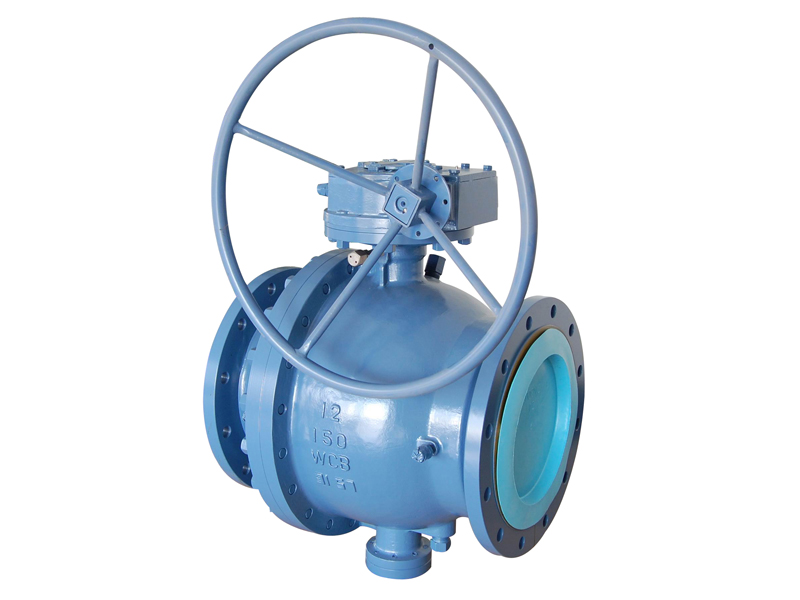
The fundamental difference lies in how the ball is supported and how sealing force is generated. In a floating ball design, the ball is not rigidly fixed. It is free to move slightly under pressure. Fluid pressure on the upstream side of the ball pushes it downstream, forcing it against the seat ring to create a seal. This design is mechanically straightforward.
In a trunnion-mounted design, the ball is fixed on a rotating shaft (the trunnion) at its top and bottom. It does not shift under pressure. The sealing force is provided by springs that push the seat rings against the ball. System pressure can also act on the seat rings to increase this contact force. This construction is generally more complex but offers distinct performance benefits.
A side-by-side evaluation clarifies the trade-offs. Regarding operating torque, floating ball valves can develop higher torque, especially in larger sizes or at higher pressures, as the sealing force is directly proportional to line pressure acting on the ball's area. Trunnion-mounted designs, with their mechanically pre-loaded seats, typically exhibit lower and more consistent operating torque across a wide pressure range.
For pressure capability, floating ball designs are commonly applied in low to medium-pressure classes. Trunnion-mounted designs are the standard for high-pressure applications and larger diameters, as the fixed ball prevents excessive seat load, and manageable torque is maintained. The sealing mechanism also differs: floating balls often provide unidirectional sealing, while trunnion designs frequently offer bidirectional sealing capability.
The choice between designs is guided by service parameters. Floating ball valves present a cost-effective solution for many standard applications, such as utility services, fuel gas lines, and other systems with moderate pressure ratings. Their simpler construction can be an advantage for routine services.
Trunnion-mounted ball valves are typically specified for more demanding conditions. These include mainline transmission pipelines, station piping, and any application with high pressure, large diameter, a requirement for low operating torque (critical for actuator sizing), or frequent cycling. Their robust construction supports the needs of these services.
Both designs can incorporate features like fire-safe seals, anti-static devices, and extended welding ends. The choice of seat materials—soft, metal, or a combination—interacts with the ball design. For instance, the controlled sealing force of a trunnion design can be beneficial when using delicate or expensive seat materials, as it prevents over-compression.
Selecting between a floating ball and a trunnion-mounted Full Welded Valve is a decision rooted in the application's technical requirements. Evaluating factors such as line pressure, valve size, available actuating force, and sealing direction requires an appropriate design choice. This considered approach helps procure a valve whose internal mechanics are well-matched to its intended duty, promoting reliable long-term service and functional integration within the piping system.
Model:
Model:
Model:
 Phone: +86-15325080303
Tel: +86-0577-67388008
Email: info@fy-valve.com
Phone: +86-15325080303
Tel: +86-0577-67388008
Email: info@fy-valve.com
Quick Links
Contact Us
Copyright ©
Fangyuan Valve Group Co., Ltd.
All Rights Reserved.
China Valve Manufacturer