English
 русский
 Español
 عربى
عربى
Industry News
Home / News / Industry News / How Does High Pressure Sealing Gate Valve Ensure Reliable Industrial Control
2026-05-22
In high pressure pipeline environments, isolation is not only about stopping flow. The more sensitive issue is what happens inside the valve body when pressure starts acting on internal surfaces during operation.
A High Pressure Sealing Gate Valve is typically used in sections where full separation of flow paths is required. Its behavior is not only defined by design drawings but also by how internal parts react when pressure builds, shifts, or remains trapped during long operation cycles.
Small changes in alignment or contact condition can influence whether the sealing state remains stable or begins to drift gradually over time.
In many pipeline layouts, there are points where partial control is not suitable. Flow either needs to pass freely or be fully isolated without ambiguity.
In these situations, a High Pressure Sealing Gate Valve is placed as a clear isolation element rather than a regulating device.
Typical usage conditions include:
It is less about continuous adjustment and more about creating a stable open or closed state that does not introduce uncertainty into the flow path.
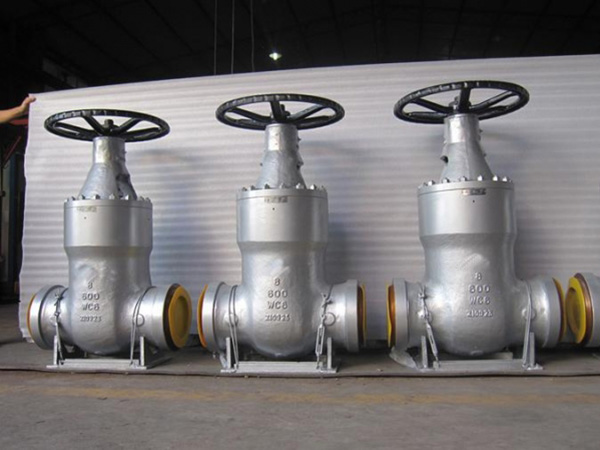
Sealing in high pressure conditions is not a single event. It develops through a sequence of contact changes.
During closure, the wedge gradually moves toward the seat. At this stage, even minor deviation in alignment can change how the first contact begins. Once contact is formed, pressure inside the line starts to influence how tightly the surfaces are pressed together.
However, this effect is not always uniform. Depending on contact quality, pressure can either support sealing or concentrate stress in limited areas.
The overall behavior is usually shaped by a combination of:
It is more of a developing condition than a fixed mechanical state.
Sealing stability is often affected by internal geometry and how moving parts behave under load. These influences do not always appear immediately but tend to develop during repeated operation.
Small differences in alignment or surface condition can gradually affect how evenly contact is formed between components.
| Internal Element | Practical Influence During Operation |
|---|---|
| Wedge movement path | Changes how contact begins during closure |
| Seat positioning | Affects distribution of sealing force |
| Stem guidance | Influences smoothness of movement under load |
| Contact surface condition | Impacts friction behavior over time |
These factors tend to interact rather than act independently, which is why small deviations in one area may affect overall sealing behavior.
When pressure exists on both sides of the valve, internal forces no longer remain balanced. One side may push against the closing element while the other side offers different resistance depending on flow condition.
This creates variation in the effort required during operation.
In real operation, several patterns are commonly observed:
The same High Pressure Sealing Gate Valve may behave differently depending on how pressure is distributed at the moment of operation.
Wear usually starts in small ways. At the beginning, the valve may still close normally, and the change is not always easy to notice. Over time, though, repeated movement, pressure contact, and surface rubbing begin to leave marks on the sealing area.
The seat and wedge are the parts that take the main load during opening and closing. When the contact is not fully even, one side can carry more force than the other. That is where wear tends to appear first.
A few common reasons are:
In service, this kind of wear does not always look dramatic. Sometimes it shows up as a slower closing feel, a less stable seal, or a change in how the valve behaves after long use.
Material choice is rarely made on one factor alone. Pressure, temperature, corrosion tendency, and surface contact all have to be considered together. A body material may be acceptable on its own, but the internal trim and sealing surfaces often need a different level of attention.
The main goal is to keep the valve stable while reducing the chance of surface damage or early deformation. In harsher service, the internal parts are often chosen with wear resistance and structural strength in mind, while the sealing faces are selected for contact durability.
| Component Area | Common Selection Focus |
|---|---|
| Valve body | Strength and pressure support |
| Seat area | Surface durability and contact stability |
| Wedge or gate | Wear resistance during repeated movement |
| Stem | Mechanical stability and smooth operation |
The material set is usually matched to the service condition rather than chosen by appearance. What works in one pipeline section may not behave the same way in another.
Pressure locking happens when trapped pressure inside the body makes movement harder than expected. It is one of those conditions that may not show up during normal operation, then suddenly become noticeable when the valve is asked to move after a period of trapping.
The problem is often linked to internal cavities where pressure cannot escape freely. When that pressure builds up, the moving parts can become harder to lift or shift.
Ways this is usually handled include:
In practice, the issue is not only about the valve itself. The surrounding pipeline layout and operating routine also matter. A well-designed valve can still run into trouble if the pressure environment is not managed carefully.
Installation is often treated as a routine step, but small mistakes here can carry over into long-term operation. If the valve body is not aligned properly with the pipeline, or if flange loading is uneven, sealing behavior can change from the very beginning.
Maintenance is similar. It is not only about repairing visible damage. It is also about keeping the moving parts, sealing surfaces, and operating mechanism in a condition that remains predictable.
Some practical points are:
The service life of the valve is often influenced by these small details more than by one major event. A stable installation and a consistent inspection routine usually matter more than a quick adjustment after a problem has already developed.
Model:
Model:
Model:
 Phone: +86-15325080303
Tel: +86-0577-67388008
Email: info@fy-valve.com
Phone: +86-15325080303
Tel: +86-0577-67388008
Email: info@fy-valve.com
Quick Links
Contact Us
Copyright ©
Fangyuan Valve Group Co., Ltd.
All Rights Reserved.
China Valve Manufacturer