In many pipeline systems, pressure is not the only concern. Temperature changes, limited installation space, and long operating cycles can all affect how a valve performs after it is installed. Because of that, engineers often pay attention to structural details long before the pipeline enters operation.
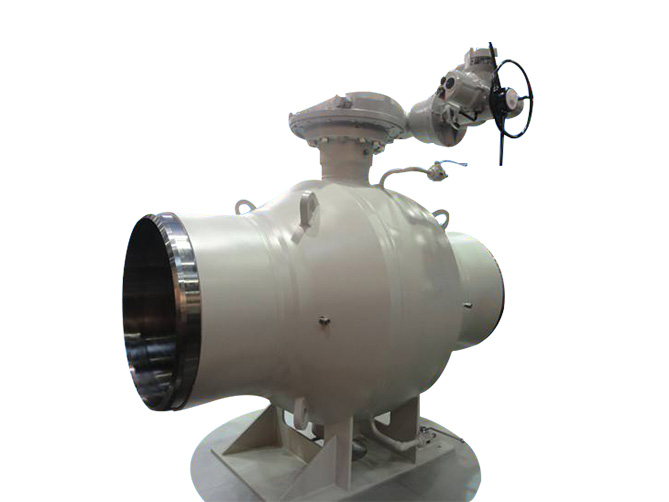
An All Welded Ball Valve is commonly seen in enclosed pipe networks, underground lines, and industrial flow systems where reducing external leakage points matters. Compared with assembled body structures, welded construction leaves fewer exposed connections along the valve body. In some working environments, this becomes an important consideration during equipment selection.
Different industries use different pipeline layouts, so the valve requirements are rarely identical. Some systems focus on pressure retention. Others pay more attention to sealing stability during repeated operation.
What Makes It a Reliable Choice for High Pressure Applications
High pressure conditions tend to expose weak areas inside a pipeline system fairly quickly. Flanges, threaded joints, and external sealing points usually receive more attention once pressure fluctuation becomes frequent.
That is one reason welded body structures continue to appear in heating lines, gas transport systems, and industrial process pipelines. Fewer external joints mean fewer areas where movement or stress concentration may develop over time.
In buried pipelines, this type of structure is also practical from a maintenance perspective. After installation, access around the valve body may become limited, especially in compact underground layouts.
Several details are often discussed during selection:
- body rigidity under pressure cycling
- connection stability after welding
- smooth internal flow path
- reduced movement around external joints
Not every system requires the same valve configuration. In low pressure environments, assembled structures may still be acceptable. Conditions become different once operating pressure and temperature variation increase together.
How Welding Methods Affect Performance and Longevity
Weld quality is usually judged over time rather than during installation alone.
A valve may appear structurally stable at first, yet uneven heat distribution during production can gradually affect body alignment after repeated temperature changes. This is one reason manufacturers place considerable attention on welding consistency around the body section.
In industrial pipelines, stress often accumulates near welded areas instead of the center of the valve itself. If the weld transition is not smooth enough, small deformation may eventually influence sealing contact inside the structure.
Some fabrication processes focus on keeping the welded area balanced instead of simply increasing wall thickness.
| Area During Fabrication |
Common Concern in Operation |
| Weld transition |
Uneven stress distribution |
| Internal surface finishing |
Flow resistance inside the pipeline |
| Heat affected sections |
Structural movement after thermal cycling |
| Alignment around the body |
Sealing contact stability |
Field conditions also matter. In outdoor systems exposed to seasonal temperature variation, the welded area may experience expansion and contraction repeatedly during operation. Over longer periods, that movement can influence how internal components interact.
Because of this, All Welded Ball Valve production is often evaluated not only by appearance, but also by weld continuity and structural consistency.
How Sealing Design Ensures Low Leakage in Demanding Conditions
Leakage control is not determined by sealing material alone. Internal pressure, fluid characteristics, and operating frequency all influence how the sealing area behaves during service.
In some process lines, the valve may remain open for extended periods before cycling again. In others, opening and closing happens more frequently throughout the day. These differences change how the sealing surfaces wear over time.
Soft sealing structures are often used where smooth shut off performance is needed. Metal sealing designs may appear in systems exposed to elevated temperatures or abrasive media. Neither arrangement fits every condition.
Several factors usually affect sealing behavior:
- friction between moving components
- pressure changes inside the cavity
- surface wear after repeated cycling
- media containing particles or moisture
In enclosed pipe systems, reducing external leakage paths is another consideration. That is one reason All Welded Ball Valve structures are frequently selected for underground or difficult access installations.
Which Materials Provide Resistance to Corrosion and Wear
Material selection often depends more on the operating environment than on the valve structure itself. Water pipelines, gas transmission systems, and chemical processing lines expose internal surfaces to very different working conditions, so the same material arrangement is not always suitable across every application.
Some media slowly affect the internal surface over time, especially in systems where moisture or chemical content remains present during continuous operation. In other pipelines, wear is caused more by suspended particles moving through the flow passage at higher velocity. Under these conditions, surface hardness around sealing and moving areas becomes an important consideration.
In practical applications, the body material and internal components are often evaluated separately. A pipeline may require stable external strength while also needing internal surfaces capable of handling friction, corrosion, or repeated valve movement. Temperature variation can also influence material behavior, particularly in systems exposed to continuous thermal cycling.
Surface condition tends to change gradually during operation. Minor wear marks inside the valve cavity or along the sealing area may not appear immediately during installation, yet they can influence shut off performance after repeated opening and closing cycles. Because of that, material selection is usually connected closely to the actual media condition and pipeline environment rather than a single standard configuration for every system.
Why Professionals Choose It for Critical Fluid Systems
In some pipeline layouts, the decision is less about component preference and more about how the system behaves after it is closed and buried or covered. Once access becomes limited, operators usually start to favor structures that do not rely heavily on repeated external adjustment.
A welded body design is often considered in that context. It stays integrated into the pipeline section instead of acting as a detachable unit. That changes how it is treated during both planning and operation.
In practice, several reasons tend to appear together rather than separately:
- fewer exposed connection points along the line
- reduced chance of movement at external joints
- simpler flow continuity in long pipeline sections
- less dependency on later mechanical tightening or adjustment
None of these factors alone defines the choice, but they often overlap in real projects.
What Are the Recommended Ways to Install and Maintain It
Installation is usually planned before any pipe section is fixed in place. Once welding starts, the margin for correction becomes smaller, so alignment is checked more carefully at an early stage rather than after assembly.
On site, workers often focus on how the valve sits between adjacent pipe sections rather than treating it as an independent component. After welding, attention shifts away from mechanical adjustment and moves toward confirming that the connection behaves consistently under initial pressure.
Maintenance is not structured around frequent disassembly. Instead, it is more about observing system behavior during operation cycles and reacting when flow patterns or resistance begin to change noticeably.
In many cases, inspection is triggered by system behavior rather than a fixed routine.
Where It Can Be Applied Across Different Industrial Systems
Welded valve structures are not tied to a single type of pipeline. They appear in different environments where the pipeline layout itself limits how often components can be accessed.
In underground installations, space constraints often shape the choice more than flow characteristics. In longer transmission lines, continuity becomes more relevant than modular replacement. In compact industrial systems, the focus is often on reducing the number of external interfaces.
What Standards and Tests Ensure Quality and Reliability
Before a welded valve enters service, it usually goes through several verification steps that focus on both structure and flow behavior. These checks are not isolated; they are meant to reflect how the valve will behave once installed into a continuous pipeline.
The inspection process typically looks at different areas in sequence rather than all at once. Some checks are visual, while others focus on pressure response or internal consistency.
| Inspection focus |
What is usually reviewed |
| Welded area condition |
Continuity along the joint line, surface uniformity |
| Internal passage |
Flow obstruction, surface irregularities |
| Sealing region |
Contact behavior under pressure change |
| Body alignment |
Stability after fabrication and handling |
| Operational movement |
Smoothness during repeated opening and closing |
What matters in real use is not only passing inspection, but whether these conditions remain stable after the valve is integrated into the pipeline system and exposed to repeated operating cycles.



 English
 русский
 Español
 عربى
عربى