English
 русский
 Español
 عربى
عربى
Industry News
Home / News / Industry News / Why Choose a Double Eccentric Butterfly Valve Factory for Industrial Applications
2026-05-08
Industrial pipelines are often expected to run under changing pressure and flow conditions. In many systems, valve performance becomes one of the key points that affects overall stability. Among different structural types, the double eccentric design is frequently selected where smoother motion and reduced internal contact are required.
In production practice, attention is usually placed on how the valve behaves during repeated operation, how it responds to different media, and whether the structure can keep a steady working state over time. A Double Eccentric Butterfly Valve Factory is involved in shaping these characteristics through machining control and assembly consistency.
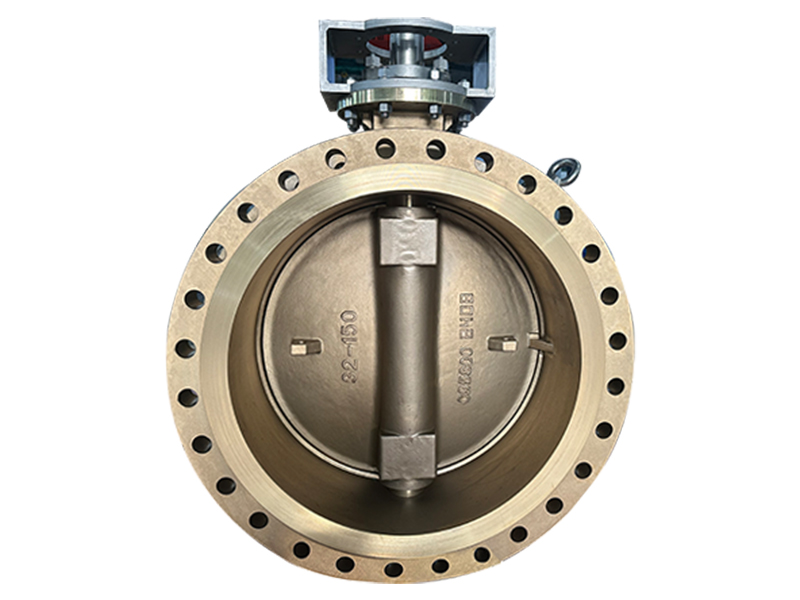
A Double Eccentric Butterfly Valve Factory refers to a manufacturing setup that produces butterfly valves with a shifted shaft design. The idea is to move the rotation center away from the sealing surface, so the disc does not stay in constant contact during operation.
In real pipeline use, this kind of structure is often connected with flow regulation tasks where gradual opening and closing is needed. It is not only about switching flow on or off, but also about keeping movement stable when the system is running under different conditions.
Such production setups are generally linked with:
A Double Eccentric Butterfly Valve Factory usually focuses on keeping these movement characteristics consistent across production batches, since small differences in structure can affect how the valve behaves in the field.
The double eccentric structure changes how the disc moves inside the valve body. Instead of rotating directly against the sealing surface, the disc gradually separates during movement. This reduces constant sliding contact, which is usually a main factor behind surface wear.
In practical operation, the movement feels less rigid compared to simple centered designs. The transition between open and closed positions is more controlled, especially when the valve is used repeatedly in pipeline systems.
During manufacturing, a Double Eccentric Butterfly Valve Factory pays attention to machining alignment and assembly positioning. Even small deviations can influence how smoothly the disc moves, so consistency in processing becomes an important part of production.
Material choice has a direct influence on how a valve performs in real environments. Temperature changes, fluid type, and internal pressure can all affect how materials respond over time.
In many cases, different parts of the valve are made from different materials. The body needs to keep structural strength, while sealing parts need a balance between flexibility and stability. If this balance shifts too much in one direction, performance may become less stable during long-term use.
A Double Eccentric Butterfly Valve Factory usually adjusts material combinations based on expected working environments. This is not a fixed approach, since different applications may require different levels of resistance or adaptability.
Sealing behavior depends heavily on how accurately parts are processed and assembled. If machining or alignment is slightly off, the sealing surface may not match properly during operation.
| Stage | Focus | Role in valve behavior |
|---|---|---|
| Machining | shaping components | controls structural accuracy |
| Assembly | fitting parts together | affects movement alignment |
| Inspection | functional checking | confirms sealing behavior |
In production practice, a Double Eccentric Butterfly Valve Factory usually relies on repeated checks during different stages instead of a single final inspection. This helps reduce variation and keeps sealing performance more consistent when valves are installed into pipeline systems.
In real pipeline environments, valve selection is rarely limited to a single condition. Different systems require different levels of flow control behavior, and the same structure can be used in multiple working contexts. A Double Eccentric Butterfly Valve Factory usually provides products that are applied in situations where flow adjustment needs to remain stable during continuous operation.
Typical application environments are not defined by one industry pattern only. Instead, they are shaped by how fluids move through pipelines and how frequently the system needs regulation. In many cases, the valve becomes part of a larger network rather than an independent component, so its behavior needs to stay consistent under changing conditions.
Before leaving the production stage, valves normally pass through several inspection steps. These steps are used to check whether movement, sealing, and structure behave as expected under working-like conditions. Even small differences in assembly can influence how the valve performs once installed, so inspection is usually repeated across different stages.
| Testing stage | Focus area | What is checked |
|---|---|---|
| Visual check | surface condition | casting marks and machining finish |
| Movement test | rotation behavior | smooth opening and closing response |
| Sealing check | contact behavior | leakage resistance under pressure |
| Assembly review | structural fit | alignment of internal components |
A Double Eccentric Butterfly Valve Factory often relies on this layered checking process to reduce variation between units and keep output behavior relatively consistent across production batches.
In many engineering projects, pipeline layouts are not identical. Space limits, connection types, and flow requirements can vary, which means a fixed configuration may not always match the installation environment. Because of this, some adjustments are often made during production to better fit actual project conditions.
Customization is usually applied in several directions:
A Double Eccentric Butterfly Valve Factory may handle these adjustments during manufacturing planning so that the final valve can better align with practical installation needs without changing the core operating principle.
When evaluating a supplier relationship, attention is usually placed on long term consistency rather than a single order. In industrial supply chains, stable production behavior and predictable delivery quality are often more important than short-term variation.
Key points often considered include:
A Double Eccentric Butterfly Valve Factory is often assessed based on how well these aspects remain stable during ongoing cooperation, since pipeline systems usually depend on consistent performance rather than occasional changes between batches.
Model:
Model:
Model:
 Phone: +86-15325080303
Tel: +86-0577-67388008
Email: info@fy-valve.com
Phone: +86-15325080303
Tel: +86-0577-67388008
Email: info@fy-valve.com
Quick Links
Contact Us
Copyright ©
Fangyuan Valve Group Co., Ltd.
All Rights Reserved.
China Valve Manufacturer